Patch Notes – October 9, 2026
Patch Notes – October 9, 2026 New Content • Unique Weapons The Unique Weapons are now available, along with their
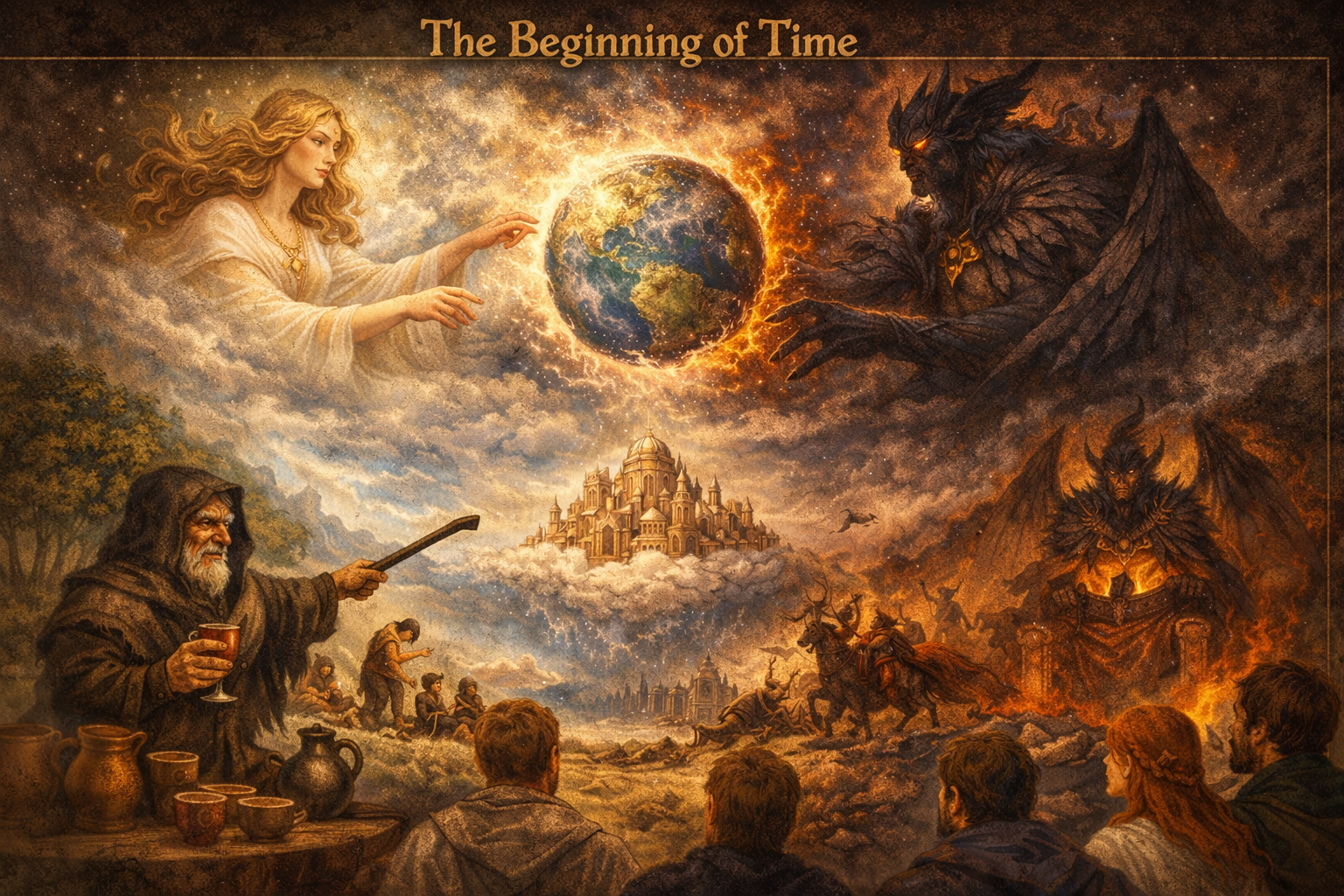
The Beginning of Time
Sit down and listen. No jokes — or I’ll shove some respect into your head with this cane myself. Better that way. Now grab some wine and shut up. I’m going to tell the story of our people… and pay attention, because I won’t repeat myself.
Even before the oldest star appeared in the sky, before worlds filled the void of the universe, two supreme beings already existed. They were older than existence itself. Their true names cannot be spoken in our language; therefore, we call them Yetzirah and Tzfah.
From the first union of these two beings, not only was the Earth born, but also the first humans, all the planet’s flora and fauna. Thus, humanity took its first steps upon the world.
Yetzirah came to love her children deeply. To remain close to them, she built a domain beyond the mortal world, an eternal place called Hekalote, the Abode of the Gods. From there, she watched over and guided humanity as, over time, tribes arose, united, and evolved, forming great centers where everything was studied and practiced: politics, science, art, and economy. All of it was part of the process of evolution.
Tzfah, however, came to hate humans. They had achieved something that had never been his: the love of Yetzirah.
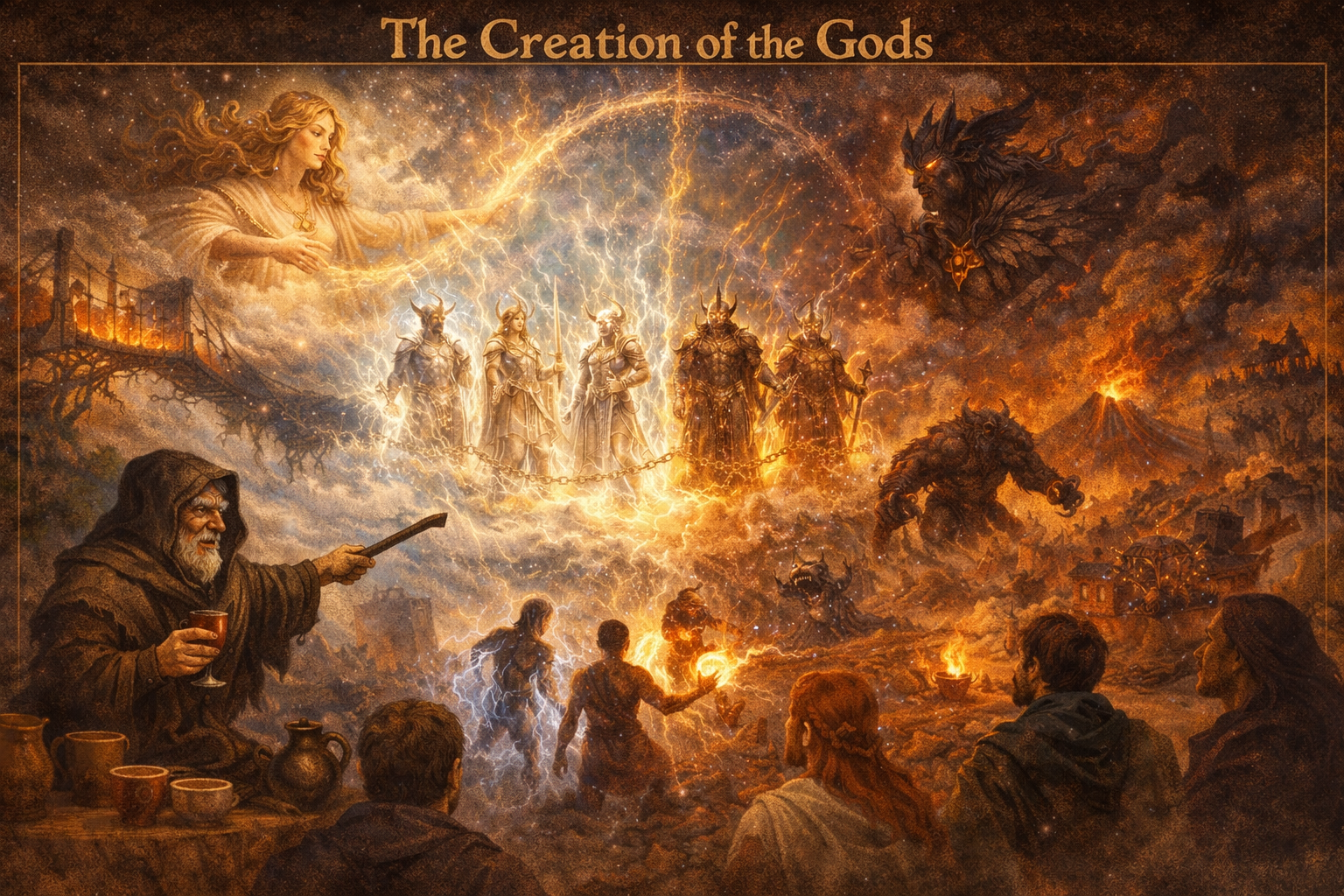
The Creation of the Gods
That’s right, you thick-headed fool. We were never allowed to pray to the supreme beings. They do not need our prayers. We prayed only to the gods — and today that no longer matters. They can no longer hear our chants, for the Sephira Bridge was destroyed.
What is the Sephira Bridge? If you listened more and talked less, you might know. Now throw more wood on the fire, I’m freezing to the bone…
After the creation of humans, Yetzirah and Tzfah united five more times. From each union, a god was born: Kafma, Armia, Daleth, Samech, and Haden.
When the gods came into existence, Tzfah realized the mistake he had made. He knew that, as they grew, his children would unite against him, driven by their love for their mother and their compassion for humanity.
Unable to destroy them, Tzfah imprisoned them in a field of ecstasy — a prison from which they would never escape.
His hatred grew even stronger. The seed of envy and wrath took deep root within him, and his fury turned against humanity. Earthquakes, volcanoes, and catastrophes ravaged the Earth, while hordes of monsters attacked villages and cities, destroying everything they found.
Despite all that Yetzirah had taught humans, they could do nothing in the face of such devastation.
Even while imprisoned, the gods took pity on human suffering. In secret, they began shaping the energy of certain humans, raising them to the absolute limit their bodies could withstand. Meanwhile, Yetzirah devised a plan to free her children and save the world.
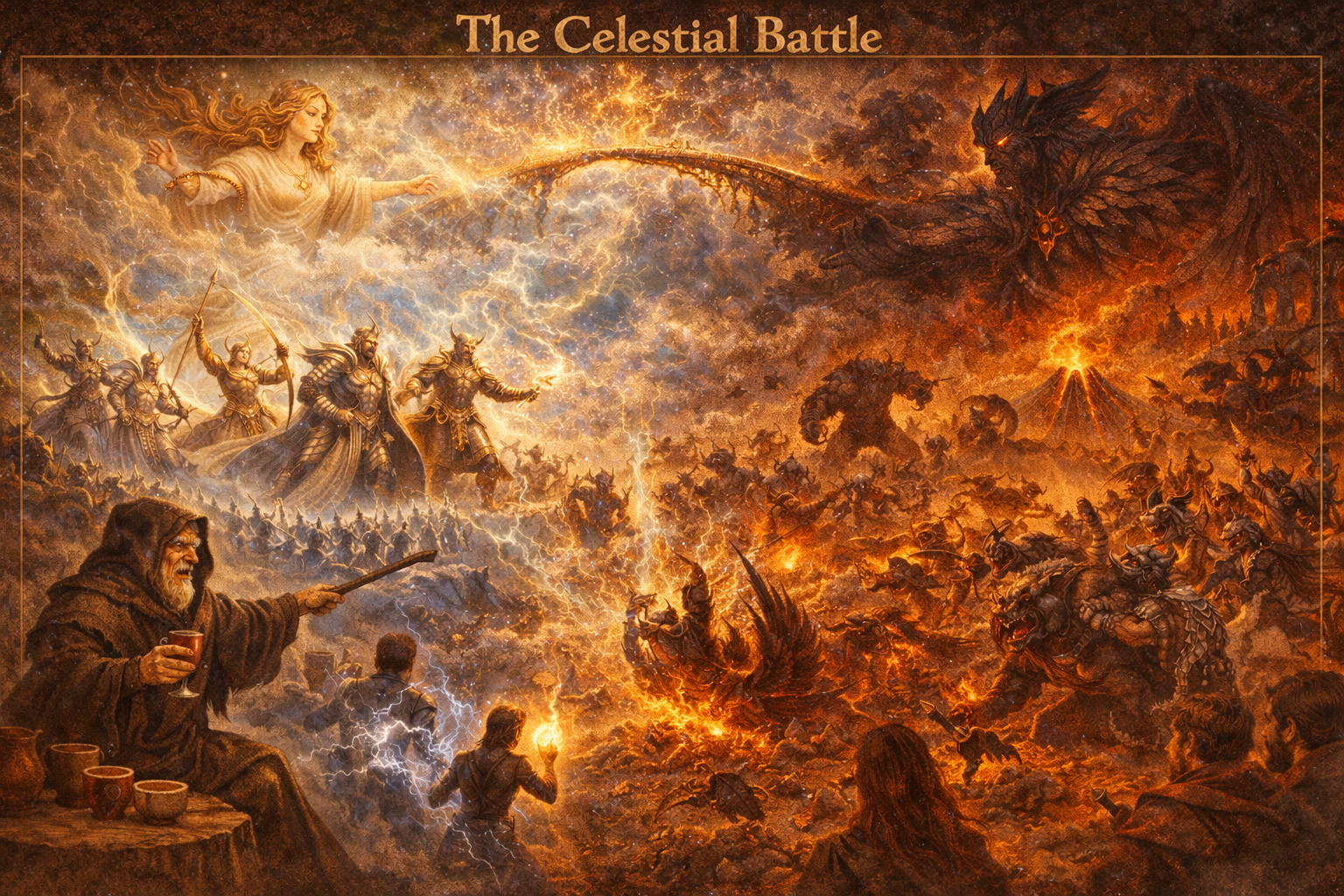
The Celestial Battle
Do you ever get tired of asking stupid questions? We know all this because, thanks to the Celestial Battle, the secrets of creation fell upon the Earth. That is why some of us can manipulate magic and spiritual energy. Deep down, I think that was what the gods wanted from the very beginning. Now be quiet and let me continue…
While the gods secretly strengthened humans, Yetzirah gradually weakened the prison of her children. Both knew they would need to unite their forces to put an end to Tzfah’s tyranny, who had enslaved a great part of humanity.
The moment the gods were freed, the battle began.
Led by Armia and Kafma, with the aid of Yetzirah, the gods charged with a fury never before seen to free the world from Tzfah’s dominion.
The impact of the conflict echoed throughout all of creation. Humans and monsters alike felt the tremor of the battle, but only a few understood that this was the decisive moment. To allow these chosen ones to reach Hekalote, Daleth created the Sephira Bridge, linking the mortal world to the divine realm.
Those touched by divine essence were able to cross it and fight for the fate of humanity. They became known as Arch.
Tzfah also created his own army, beings marked by the stain of hatred. Taking advantage of the battle, he ordered his troops to exterminate humanity, for the gods were too occupied to protect them.
Rivers of blood flowed across the Earth. Monsters arose in even greater numbers, and humanity seemed doomed.
The only solution was to banish Tzfah from the divine realm and imprison him at the center of the Earth.
In his final act of desperation, as he was cast into the mortal world, Tzfah destroyed the Sephira Bridge, interrupting the enchantment. He fell into a state of semi-consciousness — imprisoned, yet still capable of influencing the world.
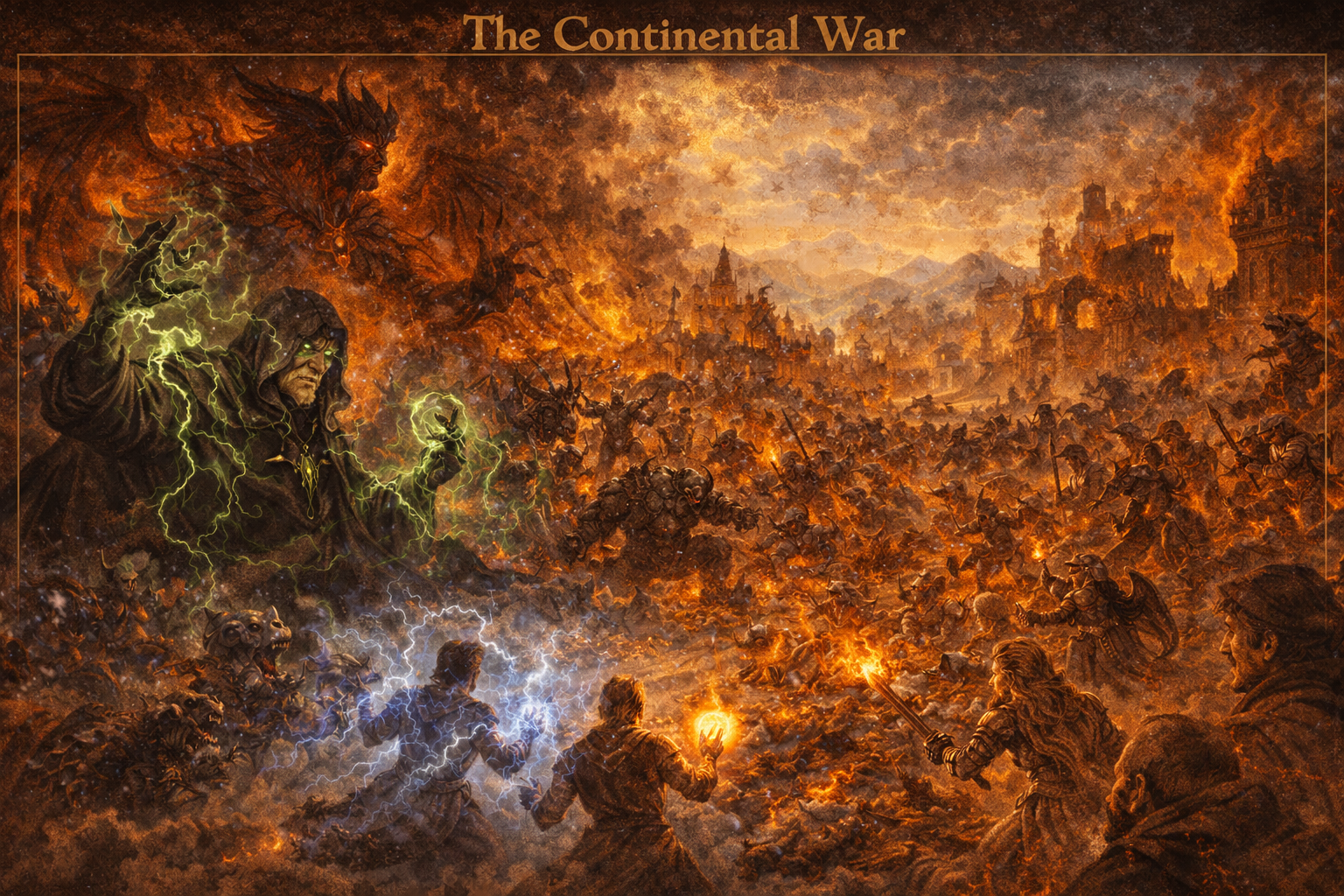
The Continental War
Did you think the war was confined to the heavens? You are slower than I thought…
With the fall of the Sephira Bridge, humans began to understand the secrets of the world and the sky. Instead of worshiping the gods, they began to study them. The divine became an object of analysis.
They learned to manipulate the fragments of Sephira, creating enchantments that would help them survive.
But greed spoke louder.
A mage from the city of Koren, named Nershess, believed he had surpassed the gods themselves. Convinced that he fully mastered that power, he allowed himself to be consumed by arrogance.
Tzfah perceived the stain upon his soul and summoned him. Together, they invaded Armia, the sacred center of the continent.
Tzfah’s army spread across human lands, destroying cities. Where monsters did not reach, Nershess’s corrupted magic did the work.
But the power of Sephira had also changed humans. Mortals capable of facing monsters emerged — the final gift of the gods. With the bridge destroyed, the gods could no longer intervene directly, only grant fragments of power to those who still believed.
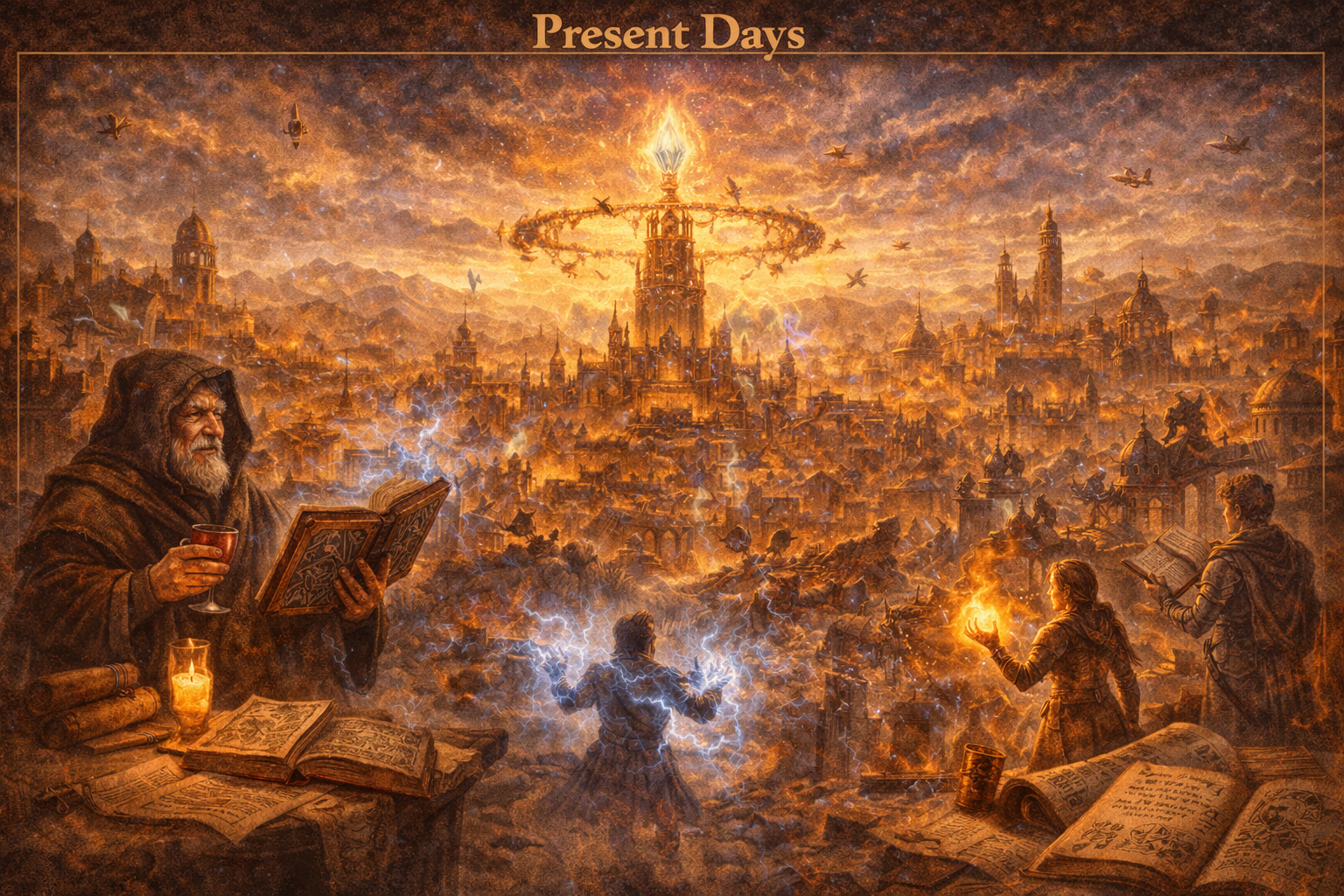
Present Days
So… you made it this far. I thought you would have given up like so many others.
Four hundred years have passed since the fall of the Sephira Bridge. The world has changed — and this time, not by the will of the gods.
Never before have so many mortals borne within their own bodies a power that was never meant to be theirs. What was once mere legend began to manifest. Celestial power became manipulable — not as absolute dominion, but as an attempt.
The Arch state ceased to be an exception, and existence itself began to tolerate, albeit unstably, forces that should not persist.
And yet, the world did not collapse.
Cities did not fall from the sky. The land did not split beneath our feet. Chaos… was contained.
Some say this is merely the result of study, discipline, and human persistence. Others claim that something changed in the very rules of existence — that evolution ceased to be a blind leap and began to follow patterns.
When a body fails, it returns.
When a limit is reached, another emerges.
When a path ends, a new trial appears.
As if the world were… correcting itself.
Old manuscripts began to circulate again. Fragmented, contradictory texts, written by different hands, in different eras. All of them mention the same thing: an Architect.
None of them agree on who he was.
Some say he was a human who understood the fragments of Sephira too well. Others claim he was an entire order, erased from history. There are those who believe he never existed — that the name arose merely to give meaning to what we cannot explain.
But one name appears time and again.
Loki.
Not as a god.
Not as a savior.
But as the one who imposed rules where there was once only ruin.
The system works. The human limit has been surpassed. The world remains stable.
But stability is not a guarantee — it is a test.
Rules exist for those who believe they understand them.
And they are broken by those who dare to go beyond.
If you have come this far, perhaps you are not here to obey.
Perhaps you are here to prove whether you deserve to continue.
Best Regards,
Dynasty of Loki.
Patch Notes – October 9, 2026 New Content • Unique Weapons The Unique Weapons are now available, along with their
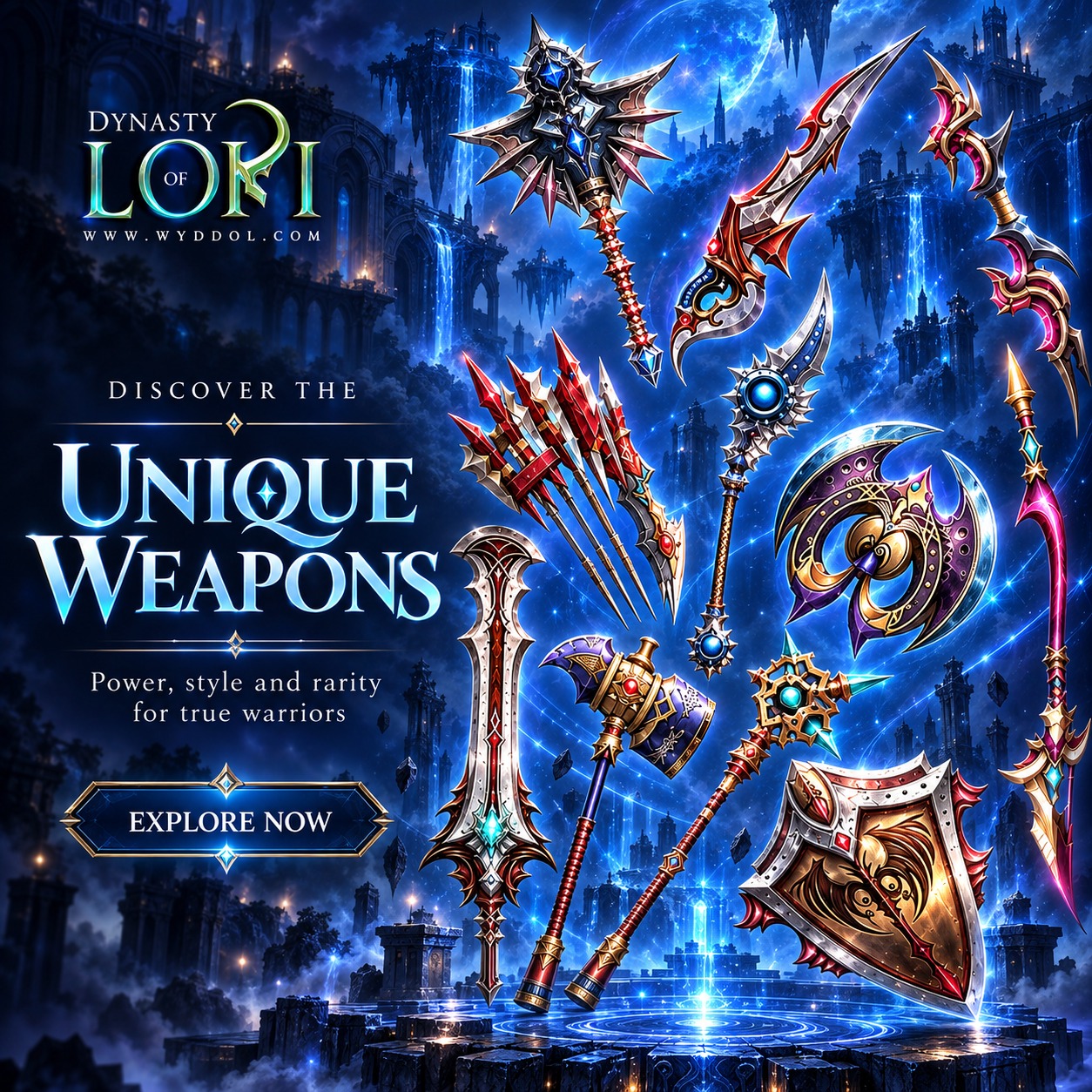
In the depths of the Rune Abyss, where darkness keeps the secrets of the Ancient Era, the Unique Weapons have